Transformer Commissioning Tests: Sequence and Dependencies
Transformer commissioning tests are a sequence, not a checklist: each step narrows what the next can prove, and the DC tests change the core for every magnetic measurement that follows.

Transformer commissioning tests are a sequence, not a checklist: each step narrows what the next can prove, and the DC tests change the core for every magnetic measurement that follows.
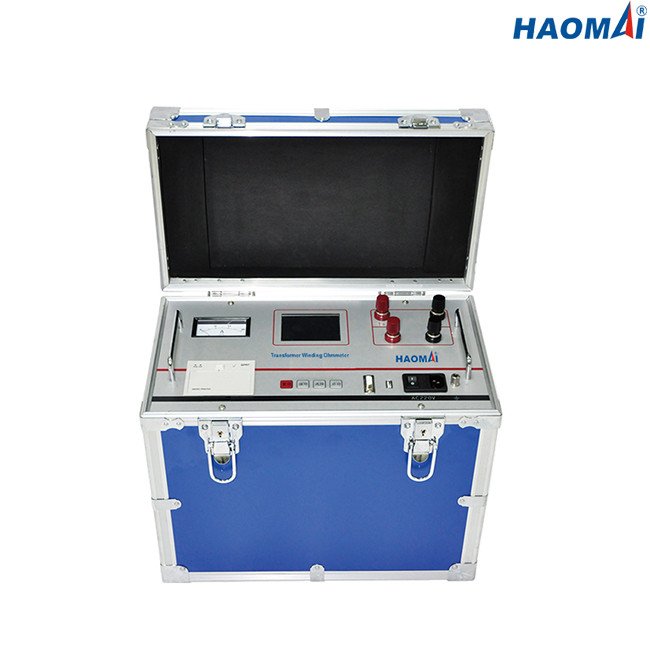
A winding resistance test measures milliohms, and at that level the reading is decided by two corrections and one comparison, not by the instrument.
A turns ratio test is only as good as the tap position it is compared against. The pattern of deviations across the tap range separates a real changer fault from a measurement error.
Three questions decide the machine, in the order a wrong answer hurts: the voltage the cable class needs, the capacitance the circuit presents, and the diagnostics the report has to carry.
Lower frequency buys reach on long, high-capacitance cable and pays for it in time. What sets the vlf test duration, and where the standard warns that longer is not safer.
A withstand test ends in pass or fail. VLF tan delta testing reads the cable’s remaining margin from the same 0.1 Hz excitation, if you read the curve and not the number.
A cable that passed in the factory has been pulled, bent and jointed since. The cable after-laying test is the only measurement of the cable as installed.
Why DC proof testing was abandoned on extruded cable, how the VLF test voltage is derived from U0, what the range covers, and the residual-voltage hazard after the test.
Differential protection on transformers, generators, busbars and lines needs six synchronized current channels. This article sets out where six-phase relay testing is required, where three-phase injection still does the job, and what the extra channels buy in power.
Differential protection is proven by injecting the currents the CTs deliver for through-load, through-fault and internal-fault cases, with every test point expressed in per-unit of rated current.